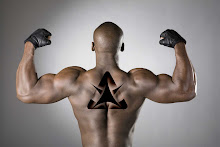
Big K at his 70% fastest.
Tuesday, March 2, 2010

Wednesday, February 24, 2010

Constellation at Luther College's Black History Conference
An interview with 52 Blocks researcher, practitioner Daniel Marks and author Thomas A. Green
Both will participate in Luther College's Black History Conference Thursday, Feb. 25
As participants in Luther College's Black History Conference Thursday, Feb. 25, New York City-based 52 Blocks researcher and practitioner Daniel Marks and Thomas A. Green, of Texas A&M University, (editor of Martial Arts in the Modern World) are among some of the country's top scholars and practitioners of traditional African and African American martial arts. Also participating in the conference are Richard Merritt, associate professor of art, Luther College; Kawon Akhenoten, 52 practitioner; T. J. Desch-Obi, Ph.D., associate professor of African and African Diaspora History at City University of New York, Baruch College and Yogi Senna of the Minnesota Capoeria Association.
JBR: Why is it important that this fighting art -- 52 Blocks -- not disappear?
Daniel Marks: 52 is a study in cultural transmission under stress. It shows how a community living on the outside of the main or popular culture survived and what it valued. The dynamics of African American life revolved around self identity, a name in description that changed over hundreds of years -- from being called Negro to Colored, to Black, Afro American, and finally African American. During this transition we would lose and regain cultural traditions that were deemed acceptable to the mainstream. 52 is in line with our legacy of boxing in North America which dates back to the 1790s, when an unknown former slave named Bill Richmond "The Black Terror" would make a name fighting for the British Heavyweight Title against their Champ Tom Crib in 1804. Although Mr. Richmond would lose the fight, his exploits became the subject of a BBC documentary detailing his life and triumphs. So in saving 52 we in turn save the legacy of many unknown men who'd boxed and trained boxers from the 1800s to the present.
Thomas Green: The 52s ... are not only fighting methods, but unique cultural contributions, forms of folk art. Recognizing them as such allows them to be used as vehicles for self-actualization and community self-esteem. The 52s, JHR, Knocking and Kicking, Rough and Tumble (for these vernacular martial arts the list of regional variants goes on and on ...) are like blues or jazz (and share many of the same aesthetic principles). Unfortunately, the medium that the art form employs is not one that is likely to bring any invitations to appear at the Smithsonian Folklife Festival any time soon. But then again, who knows?
JBR: How would you describe the cultural significance of 52 Blocks?
Daniel Marks: Now that we have taken charge of bringing this to light, we find that many elders were relieved to unburden themselves by sharing this forgotten knowledge because no one had ever asked about it before. Yet this art of fighting can be seen in plain sight in every expression of culture from dance to music even the way we worship and play. 52 is a relative of freedom fighting arts that have survived throughout the Diaspora. Arts from the Caribbean, South America, and Southern United Stated all share a common theme -- i.e., survival and resistance. This renaissance will allow us to tell about the Buffalo Soldiers, and the Maroons of Jamaica and Haiti; the slave revolts of Brazil and Columbia. As a people we adapted to change and through this journey our expression has become world culture through sports and entertainment, and yet very little is known outside of Black Studies about these accomplishments. The lesson here is to save the content for the next generation and we hope they will see the value and merit in its character, and want to carry on the tradition of culture for the next hundred years.
Both will participate in Luther College's Black History Conference Thursday, Feb. 25
As participants in Luther College's Black History Conference Thursday, Feb. 25, New York City-based 52 Blocks researcher and practitioner Daniel Marks and Thomas A. Green, of Texas A&M University, (editor of Martial Arts in the Modern World) are among some of the country's top scholars and practitioners of traditional African and African American martial arts. Also participating in the conference are Richard Merritt, associate professor of art, Luther College; Kawon Akhenoten, 52 practitioner; T. J. Desch-Obi, Ph.D., associate professor of African and African Diaspora History at City University of New York, Baruch College and Yogi Senna of the Minnesota Capoeria Association.
JBR: Why is it important that this fighting art -- 52 Blocks -- not disappear?
Daniel Marks: 52 is a study in cultural transmission under stress. It shows how a community living on the outside of the main or popular culture survived and what it valued. The dynamics of African American life revolved around self identity, a name in description that changed over hundreds of years -- from being called Negro to Colored, to Black, Afro American, and finally African American. During this transition we would lose and regain cultural traditions that were deemed acceptable to the mainstream. 52 is in line with our legacy of boxing in North America which dates back to the 1790s, when an unknown former slave named Bill Richmond "The Black Terror" would make a name fighting for the British Heavyweight Title against their Champ Tom Crib in 1804. Although Mr. Richmond would lose the fight, his exploits became the subject of a BBC documentary detailing his life and triumphs. So in saving 52 we in turn save the legacy of many unknown men who'd boxed and trained boxers from the 1800s to the present.
Thomas Green: The 52s ... are not only fighting methods, but unique cultural contributions, forms of folk art. Recognizing them as such allows them to be used as vehicles for self-actualization and community self-esteem. The 52s, JHR, Knocking and Kicking, Rough and Tumble (for these vernacular martial arts the list of regional variants goes on and on ...) are like blues or jazz (and share many of the same aesthetic principles). Unfortunately, the medium that the art form employs is not one that is likely to bring any invitations to appear at the Smithsonian Folklife Festival any time soon. But then again, who knows?
JBR: How would you describe the cultural significance of 52 Blocks?
Daniel Marks: Now that we have taken charge of bringing this to light, we find that many elders were relieved to unburden themselves by sharing this forgotten knowledge because no one had ever asked about it before. Yet this art of fighting can be seen in plain sight in every expression of culture from dance to music even the way we worship and play. 52 is a relative of freedom fighting arts that have survived throughout the Diaspora. Arts from the Caribbean, South America, and Southern United Stated all share a common theme -- i.e., survival and resistance. This renaissance will allow us to tell about the Buffalo Soldiers, and the Maroons of Jamaica and Haiti; the slave revolts of Brazil and Columbia. As a people we adapted to change and through this journey our expression has become world culture through sports and entertainment, and yet very little is known outside of Black Studies about these accomplishments. The lesson here is to save the content for the next generation and we hope they will see the value and merit in its character, and want to carry on the tradition of culture for the next hundred years.
The Legacy of 52 Blocks ( NEW FILM)

Free for our community email Danielmarks52@yahoo.com
and get the password to watch it today!
Monday, February 15, 2010
Thursday, February 11, 2010
Thursday, January 14, 2010
Tuesday, January 12, 2010
Dont Hook with a Hooker Pt.2
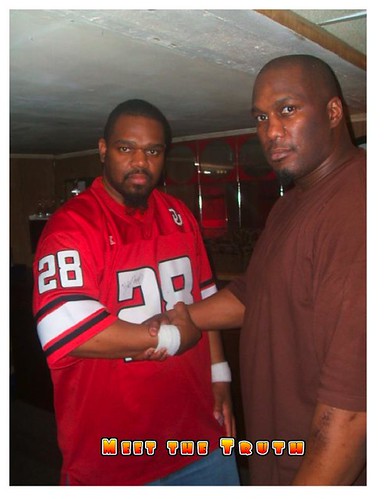
Don’t Ever Hook with a Hooker
Part2
By Constellation…
In part one of “Don’t Ever Hook with a Hooker, we discussed several types of offensive hooks; from the Sweeping left hook, to the Hook off the jab. In part two we’re going to let you in on a little secret that the hook can also be used defensively more than a counter punch. Which brings us the dreaded and often left out of discussion Right Hook. Let’s take a look at this vaunting masterpiece of destruction, and learn how to put it into use. The defensive hook is a monster as it’s always short and quick (more like the check hook) that you can throw while backing up, aiming at the arm, neck, and the head. Other targets, present themselves when you dip or slip just under a blow, while arching the hook in a 45-degree angle around the shoulder or elbow to get to the sweet spots i.e. the live, kidney, or right behind the ear. The hook is a true 3-dimentional weapon that any serious boxer needs to have in his\her arsenal to be an effective fighter.
Another Defensive hooking tactic like the Retreating Hook is done by stepping backward sliding your left foot to the right, which closes off the body, while throwing the left hook around the attacking arm, this is a classic counter to a straight right hand. But when it comes to defending using the hook the Right Hook becomes the weapon of choice at least in Constellation method of 52; combined with the proper footwork you can throw a medley of counters at your opponent, and rock him out of his socks. Using the clock as a guide the 3 positions of the counter right hook\overhand are as follows: right foot 3 o’clock short hook, right foot at 4:30 arching hook, and the right foot at 6 o’clock overhand hook. The key to these 3 hooking positions are shifting the weight from your back foot to your front foot, changing the body angle while slipping the jab, cross or left hook.
Right foot 3 O’clock:
The execution of this hook is where you place your right foot for the counter.
Like the name implies you’re going to step from the rear with you right foot stepping to the 3 o’clock position on the floor. Pivot on your toes letting your left shoulder fall back while countering over the jab with a right hook.
Right foot 4:30:
The execution of this hook is how you shift your body into your rear foot, which is already sitting in the 4:30 position on the floor. Planting your weight on your right foot and sitting hard to the power side, outside slip, known as a shoulder roll with your left shoulder. Rock back to the left keeping the angle you have created, and counter the jab by throwing an arching right hook. The key to this hook is to stay behind your left guard, which will shield you from his cross.
Right foot 6 O’clock:
The execution of this hook starts when you place your rear foot in the 6 0’clock position on the floor (right behind you) shift your weight to your rear foot, sit angling your shoulders so that you left shoulder is blocking the cross. This rocking or shifting motion draws you away from the jab, cross and allows you to lean in and counter from a safer distance.
We can extend the concept of hooking even further when we use it in the Clinch and tie-ups’ while fighting in tight. Using the Hook to catch instead of throwing a blow to drag your opponent’s arm pulling them off balance. One way is by grabbing under their elbow known as under hooking, or reaching over the outside of the arm known as over hooking. When combined you have a nice tie-up much like the control that Mike Tyson used on Evander Holyfield while biting his ear. These wrestling holdovers are from the days when Boxing was as brutal as playing football without a helmet. (Or was I the only one to do that?)
As you can see the Hook is far more than a punch it’s a tool, that when mastered can be a very formidable option, as the saying goes don’t ever Hook with a Hooker. I’ll end this with a little song just for the hookers; no, this isn’t pimp talk 101, but a look into the rhythm of a boxer as he delivers the crashing blow.
I move but my feet are never plated, anchoring them just makes me labor my steps, need to stay flexible and ready to strike, any at range or distance I can deliver. In, I move, bobbing, weaving, dipping Joe Frazier slipping. Digging deep behind cross hands, I peep, waiting for the movement to release this unsuspecting threat. Boom! There it goes that sneaky left hook right out of the bob and weave. I dipped then another one crashes flush on his face. Jaw locked, his neck to stiff he falls Back. Bang! He never saw that one coming, what a fantastic connection leaping off the floor sweeping the hook repeatedly to the head and body of the now fallen challenger.
When I move I groove, slipping and dipping, inching forward setting the pace. I’m on my grind just before I rack that smack on that ass. He shoots the jab, I dip and shift slightly off to the side, 45 degree I slide, ease back and release the crack, smack across the jaw line, make him shake and wiggle his spine. Quickly firing two more shots to his kidneys and liver, freezing the body in space. He grimaces in pain then collapses, cause a well placed hook detaches membrane and blood vessel in the brain. Can you dig it now that’s a Hook…
Daniel "mwalimu" Marks
Thursday, December 24, 2009
Monday, December 21, 2009
Sunday, December 20, 2009
Kracking Kongo

I did not watch the fight on the night it aired. I’ve since watched the knockout on Sherdog, and I can see that Mir indeed used what we call a false lead.
So let me break it down this way. Conventional fighters are taught not to lead with the right hand, because they can be countered with a left hook, or over an over hand right, which could be lights out think (Mayoga v.s. Forrest 1) This combination we like to a 3-2 Hook –Right Cross. What Mir did was step into a lazy jab, and catch Cheik Kongo with his hands down, and chin standing straight up.
What Pacquiao does is what wrestlers call changing levels. The ability to sell one movement while transitioning to another. The way Pacquiao does it is by staying on his toes and bouncing. We call that being buoyant where your weight is never firmly planted on one foot too long. Thus the switch can seem seamless in the motion of a jab, which becomes a lead cross. One other thing to point out was Mir dipping off to the side (natural slip) dipping to his left which lines up the lead right just as he delivered the blow. Had Kongo been playing attention he may have pick that shot off and easily counter with a nice 3-2, or 5-2 combo of his own (the 5-2 being a left uppercut, and right cross). The other key to Pac-man game is that he is a natural left hander; it’s when he goes conventional that he can throw you off because in one bounce he can switch leads and still bring power.
Throwing the Lead Right you have to set it up, timing is everything as you a reaching across your body from your left leg (a lunge into the blow). So you will need the short follow up combo or slipping movement as a fallback. Most times people will weave out of the way expecting to be countered if they miss. That’s why we teach head movement, and taking angles you never want to stand square with your opponent with your hand down by your side if you are a straight ahead fighter.
Daniel Marks
Constellation 52 Blocks
Saturday, December 19, 2009
Bartendaz and Urbanfit Magazine
Bartendaz shows Urban Fit you how to work out with out a gym membership.
Wednesday, December 16, 2009
Sharpening Steel.mpg
Training sets, Instruction, and putting in work on the bar. We talk it, We walk it, WE ARE Sharpening Steel.
Wednesday, December 2, 2009
MAYWEATHER - VS - PACQUIAO THE TRUE CLASH OF THE TITANS

MAYWEATHER - VS - PACQUIAO
THE TRUE CLASH OF THE TITANS
What will be seen before us is a Boxing dream match come true that should,and may very well, live up to all of it's hype. We would have two superstar combatants at the very appex of boxings pecking order, risking it all, going toe to toe for the most highly coveted Crown of them all..." BEST POUND FOR POUND FIGHTER IN ALL OF BOXING". PACQUIAO and MAYWEATHER, in their own rights, have earned for themselves very established bragging credentials. they've had between them, some of the worlds most notable bouts,and have shown class all the while , inside and outside of the ring. If indeed a fight like PACQUIAO/MAYWEATHER could be had, it would bring into question the skills paramount in both fighters that could be a boon ,or bane to their til now, most pristine careers. Whilst it would be a given that both fighters would give and receive punches to the very best of their abilities,there are some aspects that should be well noted as to have this fight last longer than three rounds.
Firstly,all the world would agree that the 'PRETTY BOY' will have to fight(REAL HARD) to keep his devilishly good looks. This means that he will have to open up,and in the intrim of doing so , he must secure himself against being out hustled by PACQUIAO.
The "PACMAN" as PACQUIAO is so aptly called, will not let MAYWEATHER rest , even as he would vye feverishly not to be unsettled in of the awesome defenses of the PRETTY BOY'S movement and his own quest to land his superb straight left hand.
When analyzing a great fighter such as Mayweather,we very quickly come to the realization that,relieving a fighter of his planned strategies are a major part of the Mayweather game; And'please dont let the defence fool ya', fore once the PRETTY BOY has become in sync with the timing of the PAC MAN 'ALL HELL CAN BREAK LOOSE'.With viciously swift well placed and timed right hands, and tightly bonded left hooks, it now becomes an all night feeding frenzy with Mayweather methodically picking the PAC MAN apart with a classic 2-3 combination set. The downside to Mayweather's defence however, is when a fighter sticks and moves instead of relentlessly attacking, thereby pressing directly up the middle. This movement is in exact momentum as that of which Pacquiao implemented in his take down of De La Hoya. By pressing, stalking, sticking and moving, Pacquiao was able to maintain his range of attack, which frustrated Oscar and made him reluctant to fire out of the fear that Pacquiao would have countered him for reaching.
But wait!there is something that puts the PRETTY BOY in a league of his own.It is that of his training regimen. He is taught to have laser like pinpoint accuracy which causes him to change his rhythm and dictate the pace of a fight, so much so, that it renders opponents baffled. No where is this most prevelent than in the Corrales fight, where he lead with the left hook which caught Chico by surprise sending him to the canvas a resounding 5 times. Then there were the four straight right hands that Gotti ate; on second thought Gotti was eating rights hands all night,right up until the fight was stopped. Floyd jr is an accurate shooter who can lead with any number of punches, including, the jab that found it's way to the mid section of the "Super One" Jab Judah. The potential problem with Floyd in this fight could very well become him damaging his brittle hands, which have alway been a known problem. This could prove to be a major obstacle in facing a fighter like Pacman who's always has his guns blazing.
Pacquiao, on the other hand has never faced a fighter as gifted as Mayweather, yet he always seems to rise to the occasion. His speed and agility may pose a problem for the aging Mayweather.
One thing is for sure, Pacman will bring the leather, spearing very little in the way of 4 and 5 punch combinations in contrast with Floyd's style, accuracy and timing. Pacquiao could win in the early exchanges by forcing Floyd to pony up and chase him.This could tend to favor the busier fighter (Pacquiao). All things being as they are,this fight would be one of sizmic proportions. One that will, in no doubt, be hailed as one of the greatest fight in the history of mankind.....
Tuesday, December 1, 2009
How To FIght like Mike Tyson (JOE TYSON DVD out TODAY!)
Fight Like Mike Tyson This ground breaking DVD teaches the unique boxing styles used by two of the most vicious and innovative boxers of all time. Innovate your fight game.
Monday, November 23, 2009
Constellation featured on the PACK blog
Daniel Marks and Constellation featured on the PACK blog
Check it out here
http://thepackblog.com/?cat=77
Check it out here
http://thepackblog.com/?cat=77
Wednesday, November 18, 2009
Question about Brazilian Jujitsu and 52
Mr. Marks,
You are very well versed in your history of African Martial Arts throughout the African Diaspora. What are your thoughts on Brazilian Jiu Jitsu. Its popularity has exploded along with the rise of MMA. Many view it as a sound base for MMA. But few consider its history with regard to the influence that African Martial Arts has had in Brazil. Most are familiar with the Gracie's story for they are responsible for founding and developing BJJ. However, it is my opinion that BJJ was developed within a culture that was strongly influenced by African traditions. For instance, Brazil was among the first countries to abolish slavery due to a series of intense rebellions. The rebellions were carried out using African fighting styles (ie. "shackle-fighting, as some would call it).
What are your thoughts?
Vince
Greeting Vince,
It’s true that real arts are developed in environments that challenge the human spirit, and the will to survive. Although BJJ is a great sport and the foundation for MMA it’s predecessor Vale Tudo which means Booth fight. Like its Caribbean and Southern cousin Ruff N Tumble (Any thing goes) were fights that included Biting, Gouging, and Head butting.
Now a bit of history, the slaves of Bahia were known for this style of combat, as they were not allowed to own weapons. Since the escaped slaves waged war against the Plantation owner (wielding weapons), yet this did not prevent the need to protect one self. Before the term Capoeira became the popular fighting style, other art forms were being merged (or dieing off) like Batique, and forms of wrestling, the names of these arts have faded to a whisper, yet can be seen in the practice of the current art of Angola. Some of the other Styles of Capoeira were modified to form a structured system now made famous by Mastre Bimba Called Regional, Bimba was best known as a warrior who fought and beat a Japanese Wrestler in a Vale Tudo match.
Capoeira is as big as Soccer in Brazil even the Graices practice the art which gave them the edge in fighting with capoeiristas. It was the modifying of Vale Tudo rules that gave birth to the UFC although the contest boasted No holds barred the rules flavoured the grappler, and most Martial Art systems had forgotten about fighting from the ground. Striking from the ground is not like grappling which is controlling your opponent, locking him up, and making him say uncle or it breaks. The thing to remember here is that Catch Wrestling in the Southern US was just as brutal and predates BJJ. Wrestlers like early Prize Fighters would travel the world with Carnivals or side shows and challenge all comers to try and lick them for money. These tough man contests are your UFC before the blending of Combat sports which help to round out all fighters
giving them the tools to compete at a higher level. So if it were not for the slaves fighting of Vale Tudo, Bjj wouldn’t be the art it is today as they owe their sport to the violence of a slave port where the term any thing goes was the norm.
peace
You are very well versed in your history of African Martial Arts throughout the African Diaspora. What are your thoughts on Brazilian Jiu Jitsu. Its popularity has exploded along with the rise of MMA. Many view it as a sound base for MMA. But few consider its history with regard to the influence that African Martial Arts has had in Brazil. Most are familiar with the Gracie's story for they are responsible for founding and developing BJJ. However, it is my opinion that BJJ was developed within a culture that was strongly influenced by African traditions. For instance, Brazil was among the first countries to abolish slavery due to a series of intense rebellions. The rebellions were carried out using African fighting styles (ie. "shackle-fighting, as some would call it).
What are your thoughts?
Vince
Greeting Vince,
It’s true that real arts are developed in environments that challenge the human spirit, and the will to survive. Although BJJ is a great sport and the foundation for MMA it’s predecessor Vale Tudo which means Booth fight. Like its Caribbean and Southern cousin Ruff N Tumble (Any thing goes) were fights that included Biting, Gouging, and Head butting.
Now a bit of history, the slaves of Bahia were known for this style of combat, as they were not allowed to own weapons. Since the escaped slaves waged war against the Plantation owner (wielding weapons), yet this did not prevent the need to protect one self. Before the term Capoeira became the popular fighting style, other art forms were being merged (or dieing off) like Batique, and forms of wrestling, the names of these arts have faded to a whisper, yet can be seen in the practice of the current art of Angola. Some of the other Styles of Capoeira were modified to form a structured system now made famous by Mastre Bimba Called Regional, Bimba was best known as a warrior who fought and beat a Japanese Wrestler in a Vale Tudo match.
Capoeira is as big as Soccer in Brazil even the Graices practice the art which gave them the edge in fighting with capoeiristas. It was the modifying of Vale Tudo rules that gave birth to the UFC although the contest boasted No holds barred the rules flavoured the grappler, and most Martial Art systems had forgotten about fighting from the ground. Striking from the ground is not like grappling which is controlling your opponent, locking him up, and making him say uncle or it breaks. The thing to remember here is that Catch Wrestling in the Southern US was just as brutal and predates BJJ. Wrestlers like early Prize Fighters would travel the world with Carnivals or side shows and challenge all comers to try and lick them for money. These tough man contests are your UFC before the blending of Combat sports which help to round out all fighters
giving them the tools to compete at a higher level. So if it were not for the slaves fighting of Vale Tudo, Bjj wouldn’t be the art it is today as they owe their sport to the violence of a slave port where the term any thing goes was the norm.
peace
Friday, November 13, 2009
A Great Question: The Difference between Jailhouse, Stato and 52
Comment by gab'bo
This is great im a filipino living in the philippines(of course) and i couldnt help but notice similarities between 52blocks and the filipino martial art of panuntukan. i hope i could see some friendly sparring between two arts but i suggest the old traditional style) and still i dnt know the difference between jail house rock and 52blocks and stato and comstock, can someone lease enlighten me thank you PEACE....>>>>
gab'bo
D.Marks Response
Peace Bro,
I think that it would be great to spar with Some filipino boxers, seeing that both styles uses slapping to prepare the blocks and counter. As for the difference in style, there really isn't any different just the names that each generation called the fight. However, there are some changes in focus due to environment Between Prison and the Streets. or in JH vs 52. Like the boxing in Prison faded out in the late 70's- so by the mid 80's fights were less common and shank attacks or edge attacks ruled the day in prison. at the same time the prison skills were gaining a new audience on the street. Thus 52 became the pretty boy style with L-Boogie , while a serious fights use the Bo-peep vision (tighter guard). the blend of both styles can be seen in the Butterfly movement that you guys call the bow-tie pattern. they are one in the same. which is why they look so much alike.
Other keys to remember is the Moors influence on Spain, and the connection of Spain to the Caribbean and America's where a lot of our arts live out side of Africa. Music and Culture are shared realities...
Last note on Boxing in the 1890's The US Navy settled in ports in the Philippines and Black Boxers Shared their knowledge of boxing, As Southern US Boxing has some influence from a stick fighting art called Kalinda that was in practice during the late 1800's from New Orleans.
peace
Daniel "mwalimu" Marks
This is great im a filipino living in the philippines(of course) and i couldnt help but notice similarities between 52blocks and the filipino martial art of panuntukan. i hope i could see some friendly sparring between two arts but i suggest the old traditional style) and still i dnt know the difference between jail house rock and 52blocks and stato and comstock, can someone lease enlighten me thank you PEACE....>>>>
gab'bo
D.Marks Response
Peace Bro,
I think that it would be great to spar with Some filipino boxers, seeing that both styles uses slapping to prepare the blocks and counter. As for the difference in style, there really isn't any different just the names that each generation called the fight. However, there are some changes in focus due to environment Between Prison and the Streets. or in JH vs 52. Like the boxing in Prison faded out in the late 70's- so by the mid 80's fights were less common and shank attacks or edge attacks ruled the day in prison. at the same time the prison skills were gaining a new audience on the street. Thus 52 became the pretty boy style with L-Boogie , while a serious fights use the Bo-peep vision (tighter guard). the blend of both styles can be seen in the Butterfly movement that you guys call the bow-tie pattern. they are one in the same. which is why they look so much alike.
Other keys to remember is the Moors influence on Spain, and the connection of Spain to the Caribbean and America's where a lot of our arts live out side of Africa. Music and Culture are shared realities...
Last note on Boxing in the 1890's The US Navy settled in ports in the Philippines and Black Boxers Shared their knowledge of boxing, As Southern US Boxing has some influence from a stick fighting art called Kalinda that was in practice during the late 1800's from New Orleans.
peace
Daniel "mwalimu" Marks
Thursday, November 12, 2009
52Blockstube.com (A 52 Blocks Community Website)
A GIFT TO OUR SUPPORTIVE BROTHERS AND SISTERS AROUND THE WORLD.
RELAX, DE STRESS, DISCUSS
Thank you all and please continue to support
Constellation 52 Blocks Fighting and Fitness
D.Marks, Big K, Giant, P.U.S.H
52Blockstube.com
ENJOY!
Subscribe to:
Posts (Atom)